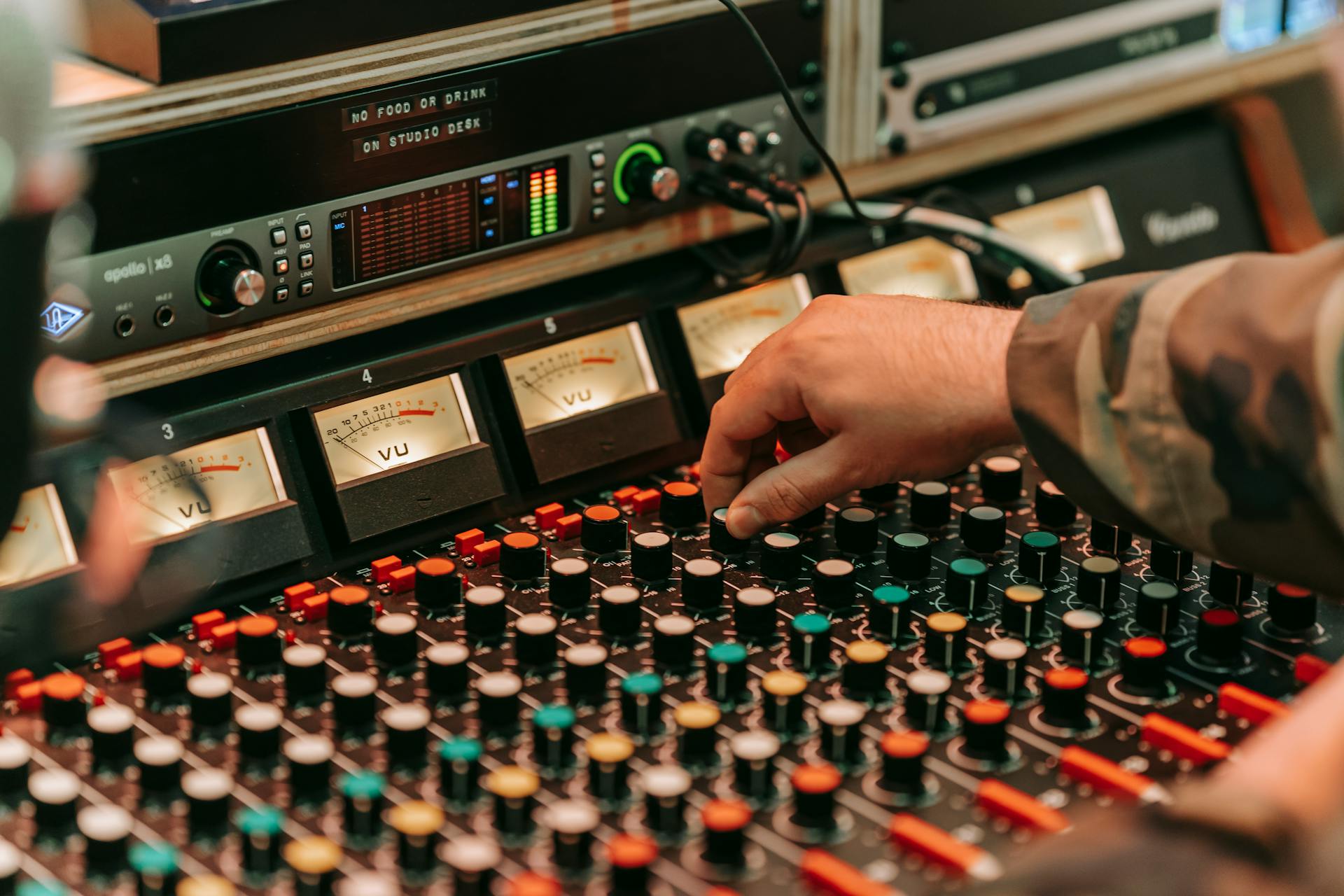
EQ (Equalisation) is the process of adjusting the balance of frequencies in a sound.
In simple terms:
- You can boost (increase) frequencies you want more of
- You can cut (reduce) frequencies you want less of
This allows you to shape how a sound sits in a mix.
Why EQ Matters
Every sound contains a range of frequencies. When multiple sounds overlap, they can clash, making a mix feel muddy or unclear.
EQ helps you:
- Create clarity between instruments
- Control tone and character
- Remove unwanted noise or harshness
- Make elements sit forward or back in a mix
The Frequency Spectrum (Quick Guide)
| Range | Frequency | What You Hear |
|---|---|---|
| Sub Bass | 20–60 Hz | Deep rumble, felt more than heard |
| Bass | 60–250 Hz | Warmth, weight |
| Low Mids | 250–500 Hz | Body, but can get muddy |
| Mids | 500 Hz–2 kHz | Core detail, musical content |
| High Mids | 2–6 kHz | Presence, attack, clarity |
| Highs | 6–20 kHz | Air, brightness, sparkle |
Types of EQ Controls
1. High-Pass Filter (HPF)
- Removes low frequencies below a set point
- Used to clean up rumble (e.g. vocals, guitars)
2. Low-Pass Filter (LPF)
- Removes high frequencies above a set point
- Useful for softening harsh sounds
3. Bell (Peak) EQ
- Boosts or cuts a specific frequency range
- Main tool for shaping tone
4. Shelving EQ
- Boosts or cuts everything above or below a point
- Common for adding “air” or “weight”
Key EQ Parameters
- Frequency → where the change happens
- Gain → how much you boost or cut
- Q (Bandwidth) → how wide or narrow the adjustment is
Practical Examples
- Vocals
- High-pass to remove rumble
- Cut around 200–400 Hz to reduce muddiness
- Boost 3–5 kHz for clarity
- Kick Drum
- Boost low end (50–100 Hz) for weight
- Cut mids to reduce boxiness
- Add attack around 2–4 kHz
- Pads / Synths
- High-pass to leave space for bass
- Gentle high shelf for brightness
Common Mistakes
- Over-boosting (makes mixes harsh quickly)
- Not cutting enough (subtractive EQ is often better)
- EQing in solo instead of in the full mix
- Using EQ instead of fixing the source sound
Key Idea
EQ is not just about making things sound “better” on their own.
It is about making everything work together.
This article is part of the Music Production Reference Library, organised into volumes covering sound, theory, production, and release.