
Overview
Electronic music is often associated with modern software, laptops, and digital production. In reality, its history stretches back well over a century, rooted in early experiments with electricity, acoustics, and recording technology.
What defines electronic music is not a single genre or style, but a method:
the creation, manipulation, and organisation of sound using electronic means
This guide traces that development from early inventions through to contemporary production, highlighting the technologies, movements, and ideas that shaped the music we hear today.
Early Experiments (Late 19th – Early 20th Century)
Long before recorded music became widespread, inventors were exploring how electricity could generate sound.
One of the earliest large-scale electronic instruments was the Telharmonium, developed in the late 1800s. It used massive rotating generators to produce tones, which were transmitted over telephone lines. Although impractical, it demonstrated that sound could be created electrically rather than acoustically.
In the early 20th century, smaller and more expressive instruments emerged:
- The Theremin, played without physical contact
- The Ondes Martenot, capable of nuanced pitch control
These instruments were used in classical composition and film soundtracks, introducing electronic timbres into wider musical contexts.
At this stage, electronic music was still experimental and often linked to avant-garde composition rather than popular culture.
The Emergence of Recorded Sound as Material (1940s–1950s)
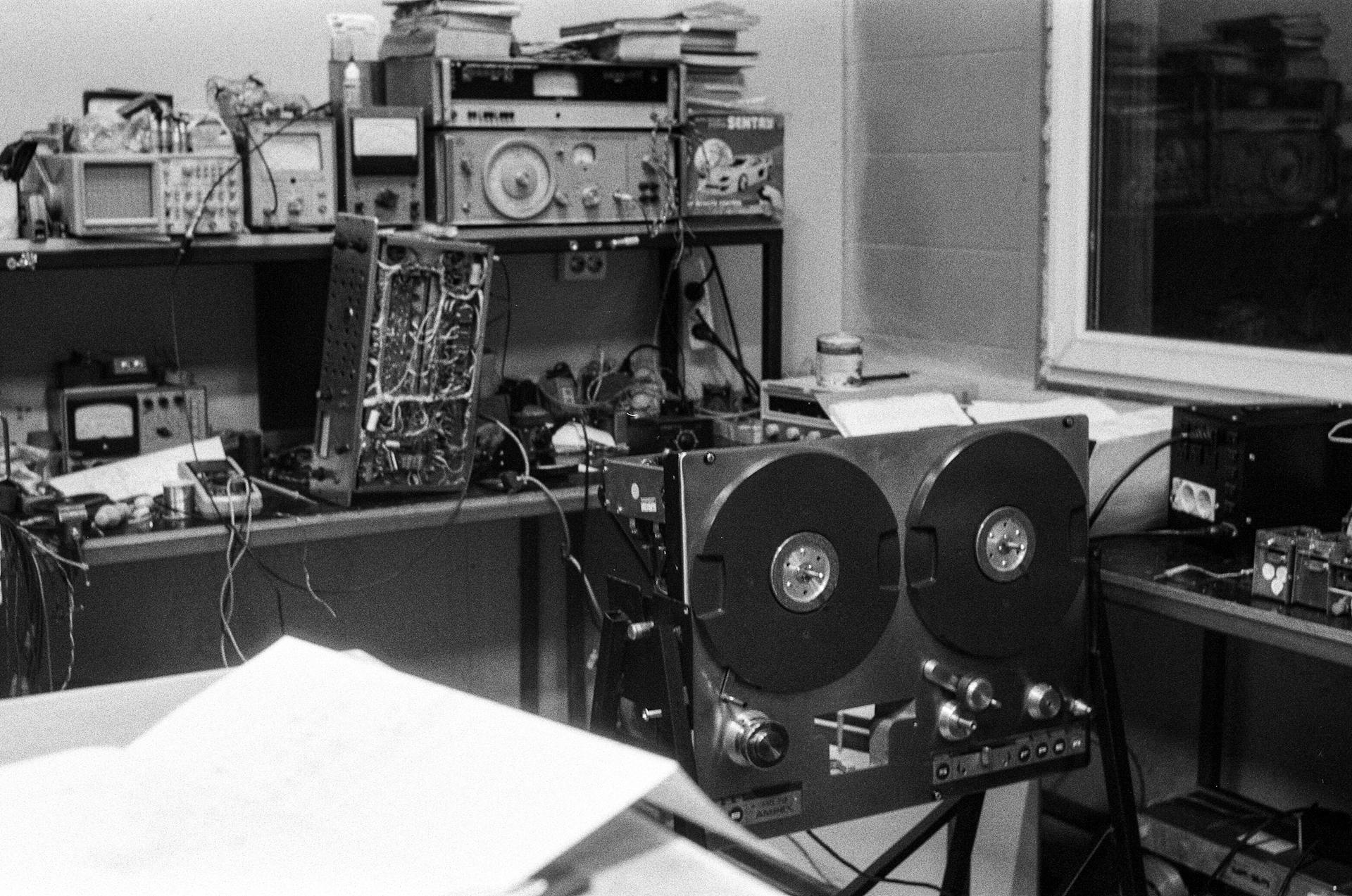
The development of magnetic tape after World War II fundamentally changed music production.
In France, Pierre Schaeffer introduced musique concrète, using recorded real-world sounds as compositional material.
Techniques included:
- tape splicing
- looping
- reversing
- altering playback speed
This shifted the definition of music:
👉 sound itself became the raw material
Meanwhile, in Germany, composers such as Karlheinz Stockhausen focused on electronically generated tones, exploring pure synthesis rather than recorded sound.
In the UK, the BBC Radiophonic Workshop became a key centre for experimental sound design, producing work for radio and television, including early electronic soundtracks.
This period established two key approaches that still exist today:
- manipulating recorded audio
- generating sound electronically
The Birth of Synthesis (1960s–1970s)
The introduction of voltage-controlled synthesizers marked a major shift.
The Moog synthesizer, developed by Robert Moog, allowed musicians to control pitch, timbre, and dynamics electronically.
Key components included:
- oscillators (sound generation)
- filters (tone shaping)
- envelopes (dynamic control)
Other systems, such as the ARP 2600, expanded accessibility and usability.
A major cultural moment came with Wendy Carlos’s Switched-On Bach, which demonstrated that synthesizers could be used musically and expressively, not just experimentally.
At the same time, artists like Brian Eno began exploring texture, atmosphere, and generative approaches, laying the groundwork for ambient music.
Electronic Music and Popular Culture (1970s–1980s)
By the late 1970s, electronic instruments were entering popular music.
Artists such as Kraftwerk created a new aesthetic based on:
- repetition
- machine rhythms
- synthetic sound
Their influence extended into:
Key technologies shaped this period:
- The Roland TR-808
- The Yamaha DX7
These tools became defining sounds of the era, used across genres from pop to early rap.
Electronic music was no longer confined to studios or academic contexts. It was becoming part of mainstream culture.
Club Culture and Dance Music (1980s–1990s)
Electronic music became deeply connected with clubs and dance culture.
In Chicago, house music emerged from DJs experimenting with drum machines and disco records.
In Detroit, techno developed as a more futuristic, machine-driven form.
Important tools included:
- The Roland TB-303
- Drum machines and samplers
In the UK and Europe, rave culture expanded rapidly, leading to:
- acid house
- jungle
- drum and bass
- trance
This period established electronic music as:
- a cultural movement
- a social experience
- a global industry
Sampling and the Breakbeat Era
Alongside synthesis, sampling became central.
Artists began using:
- drum breaks
- vocal snippets
- fragments of existing recordings
This led to genres such as:
- hip-hop
- jungle
- trip-hop
Sampling blurred the line between composition and collage, continuing ideas from musique concrète in a new context.
The Digital Studio (1990s–2000s)
The rise of personal computers transformed music production.
Digital Audio Workstations (DAWs) allowed artists to:
- record
- edit
- arrange
- mix
Software such as Cubase and Ableton Live made production more accessible than ever.
The introduction of VST plugins meant:
👉 entire studios could exist inside a computer
This led to:
- home studios replacing professional studios for many artists
- rapid increase in music production
- new genres emerging quickly
The Internet and Distribution (2000s–2010s)
The internet changed how music was distributed and discovered.
Platforms such as:
- SoundCloud
- Bandcamp
- Spotify
- YouTube
enabled artists to release music independently.
This led to:
- direct-to-fan distribution
- global access to niche scenes
- rapid genre fragmentation
Artists no longer needed traditional labels to reach audiences.
The Streaming Era (2010s–Present)
Streaming platforms became dominant.
Music consumption shifted from:
- ownership (CDs, downloads)
to - access (streaming)
This changed:
- revenue models
- release strategies
- listening habits
Artists began releasing:
- singles more frequently
- shorter projects
- continuous content
Contemporary Production (2010s–Present)
Modern electronic music exists across multiple layers:
- mainstream EDM and pop
- underground club scenes
- experimental and ambient work
- audiovisual performance
Production tools now include:
- DAWs
- modular synthesizers
- hybrid setups
- AI-assisted tools
The barrier to entry is low, but the volume of music is high.
Key Themes Across the History
Technology Shapes Music
New tools lead to new sounds and genres.
Access Expands Over Time
From laboratories to home studios.
Experimentation Remains Central
From tape manipulation to modular synthesis.
Distribution Evolves
From physical media to streaming and direct platforms.
Where This Leaves You
Today, you can:
Understanding this history provides context for those possibilities.
Final Thoughts
Electronic music has evolved through a constant interaction between:
- technology
- creativity
- distribution
Each new development creates new opportunities, but the core idea remains:
👉 using technology to shape sound in new ways
