
Introduction
MIDI stands for Musical Instrument Digital Interface. It is a system that allows musical devices, software, and computers to communicate with each other.
Unlike audio, MIDI does not contain sound. It contains instructions that tell a sound source what to play.
What MIDI Actually Does
MIDI messages describe musical performance data. This includes:
- which note is played
- when it starts
- how long it lasts
- how hard it is played (velocity)
For example:
Pressing a key on a MIDI keyboard sends a message like:
“Play note C3, at this velocity, now”
The sound itself is generated separately by:
- a software instrument (VST)
- a hardware synthesiser
- a sampler
MIDI vs Audio
This is the most important distinction.
MIDI
- data (instructions)
- editable
- no sound on its own
Audio
- actual sound
- recorded waveform
- not easily changed
In a DAW, MIDI is often used to control instruments, while audio is used for recorded sound.
Where You Use MIDI
MIDI is used throughout modern music production:
- playing virtual instruments in a DAW
- programming drum patterns
- sequencing synths
- controlling parameters (filters, effects, volume)
It allows you to separate performance from sound design.
MIDI in a DAW
In a typical DAW workflow:
- You record or draw MIDI notes
- These notes trigger a virtual instrument
- The instrument generates audio
This means you can:
- change notes after recording
- swap instruments without re-recording
- adjust timing and velocity
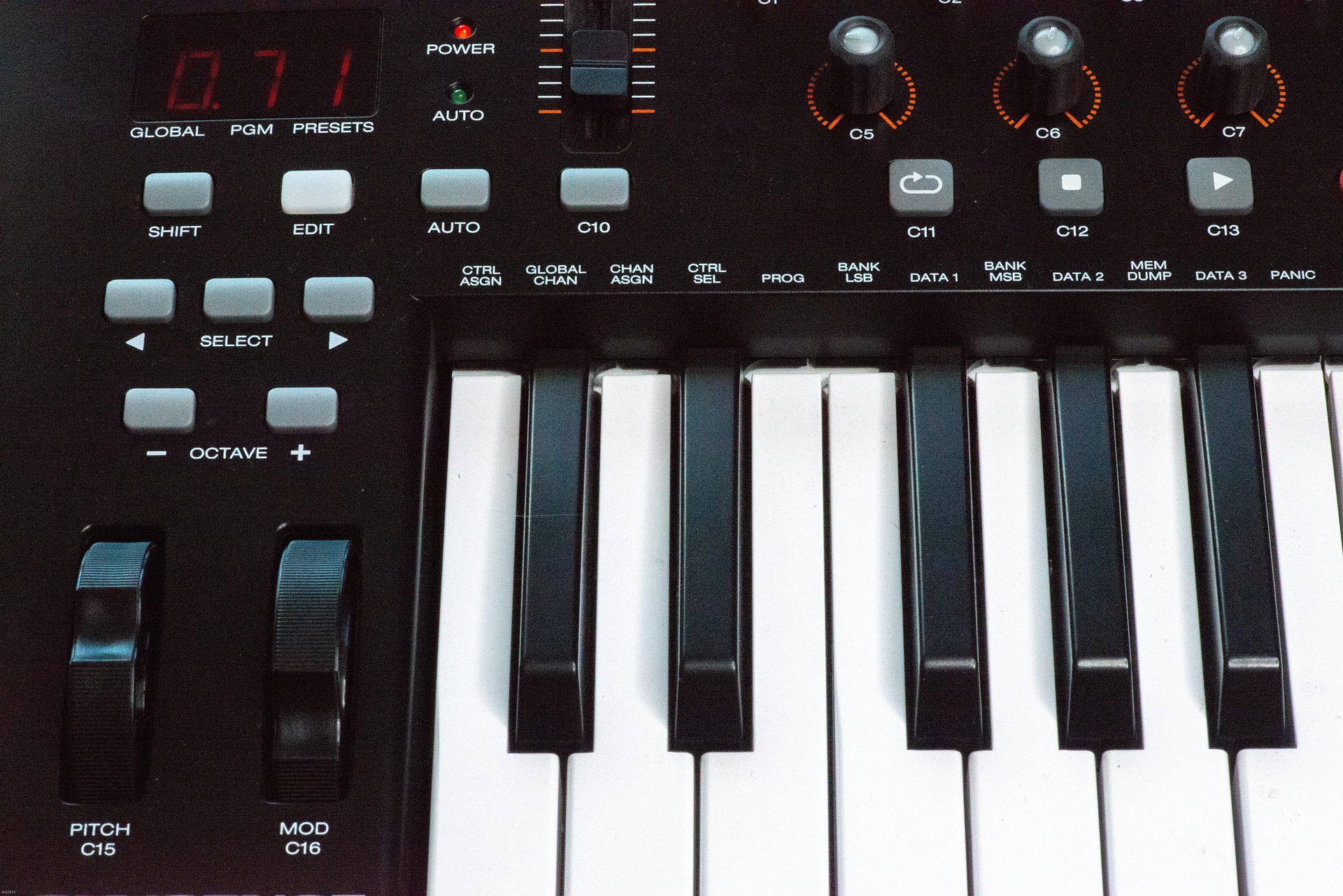
MIDI Controllers
Common MIDI devices include:
- MIDI keyboards
- pad controllers
- control surfaces
These do not produce sound on their own. They send MIDI data to other devices or software.
MIDI CC (Control Change)
MIDI can also control parameters using CC messages.
Examples include:
- filter cutoff
- modulation
- volume
- panning
This allows expressive control over sound beyond just notes.
Why MIDI Matters
MIDI is essential because it gives you:
- flexibility — edit performances easily
- control — shape sound in detail
- efficiency — reuse and adapt musical ideas
It is one of the core systems behind modern music production.
Try This
In your DAW:
- Create a MIDI track
- Load a software instrument
- Draw a simple pattern (e.g. C–E–G)
- Change the instrument sound
Notice how:
- the notes stay the same
- the sound changes completely
Related Topics
- What is a DAW?
- Using MIDI in a DAW
- Writing Basslines
- What is a Synthesiser?
This article is part of the Music Production Reference Library, organised into volumes covering sound, theory, production, and release.