What is Gain Staging?
Gain staging is the process of controlling signal level as audio moves through a system.
Every stage in a signal chain has an input and an output. If the signal is too high, it distorts. If it is too low, detail is lost and noise becomes more noticeable.
Gain staging is about keeping levels consistent so the signal remains clear and usable from source to output.
Why Gain Staging Matters
Before digital audio, gain staging was essential.
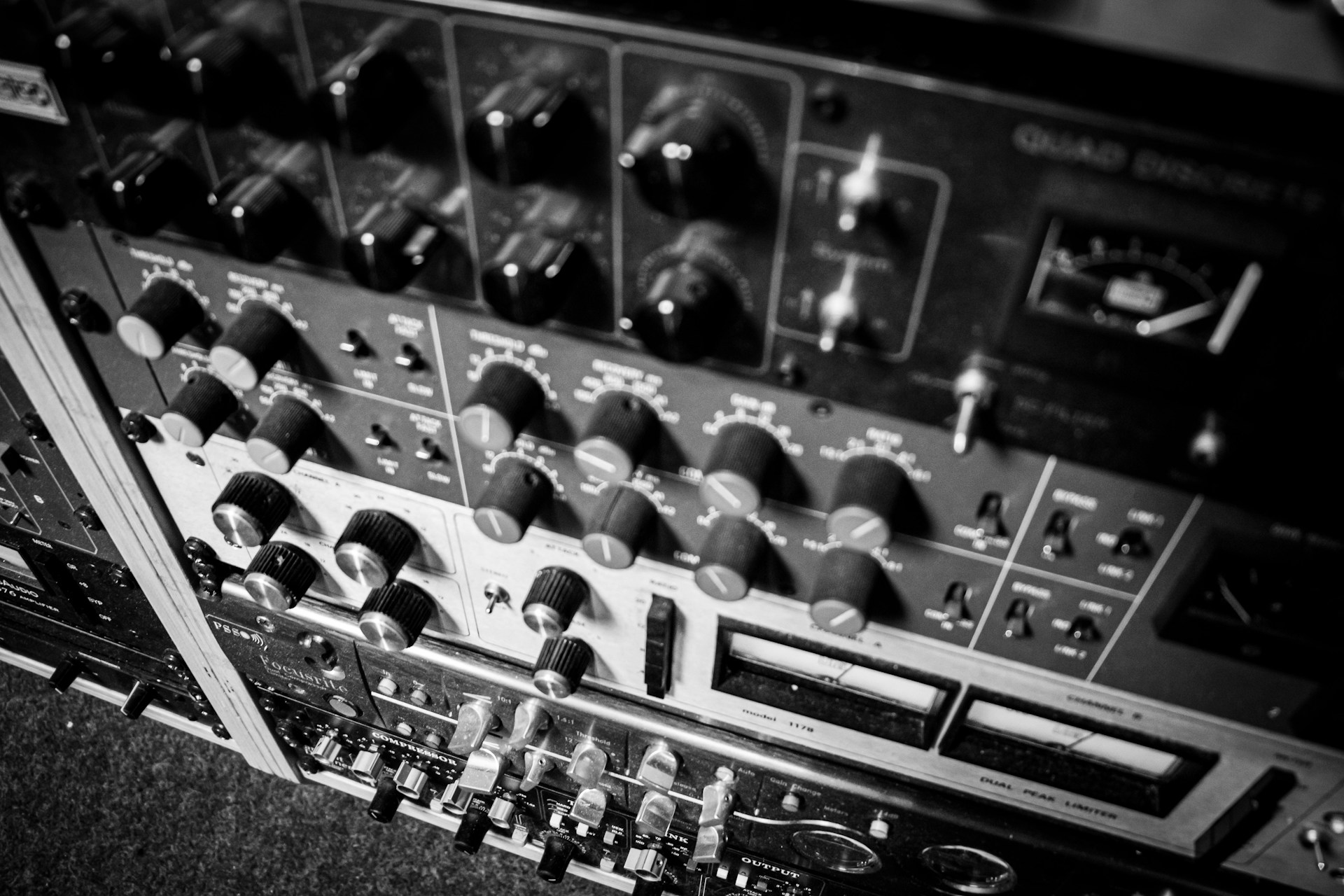
Analogue consoles from companies like Solid State Logic and Neve had limited headroom. Engineers had to carefully balance levels at every stage to avoid distortion and noise.
Digital systems removed much of that limitation, but the principle still applies. Poor level management still leads to distortion, weak signals, and unpredictable behaviour in processing.
Understanding Signal Flow
Audio does not exist in isolation. It moves through a chain.
A simple example:
Sound Source → Processing → Output
In synthesis, this might look like:
Oscillator → Filter → Amplifier → Output
Each stage affects both the sound and its level.
If one stage is too loud, everything after it is affected.
Headroom
Headroom is the space between your signal level and the maximum level before distortion.
In digital systems, that maximum is 0 dBFS.
Once a signal exceeds this point, it clips. Clipping produces harsh distortion that cannot be undone cleanly.
Leaving headroom gives your signal space to breathe and prevents unwanted artefacts.
Noise Floor
Every system has a base level of noise.
If your signal is too quiet, the noise floor becomes more noticeable relative to the audio.
Good gain staging keeps your signal well above the noise floor without pushing it into distortion.
Unity Gain
Unity gain means the signal level stays the same as it passes through a stage.
This is often the starting point when building a signal chain.
From there, changes in level are intentional rather than accidental.
Gain Staging Inside a Synth
Gain staging is not just a mixing concept. It happens inside instruments as well.
In a synthesizer:
- Oscillator level affects how hard the signal hits the filter
- Filter drive can introduce saturation
- Envelope shaping changes perceived loudness
- Output level determines how the sound sits in a mix
Pushing a filter or amplifier stage too hard can introduce distortion before the signal even reaches your DAW.
This is why two patches with similar settings can feel very different in level and tone.
A Practical Baseline
At a foundational level, gain staging can be simplified:
- Avoid clipping at any stage
- Avoid extremely low signal levels
- Keep levels consistent through the chain
You do not need precision to get this right. You need awareness.
Common Beginner Issues
- Turning everything up too loud too early
- Ignoring levels inside synths and instruments
- Confusing volume with quality
- Not noticing distortion until later in the process
These problems compound as projects grow.
Why This Matters
Gain staging is not just about avoiding problems.
It shapes how sound behaves:
- It affects tone when signals hit filters or saturation stages
- It determines clarity and balance
- It sets the foundation for mixing
Understanding this at the synthesis level makes later stages easier.
Where This Leads
This article focuses on what gain staging is and how it works at a basic level.
In mixing, the same concept becomes part of a repeatable workflow, affecting plugin behaviour, balance, and headroom.
👉 See: Gain Staging Explained (Volume 5 — Mixing & Sound Design)