
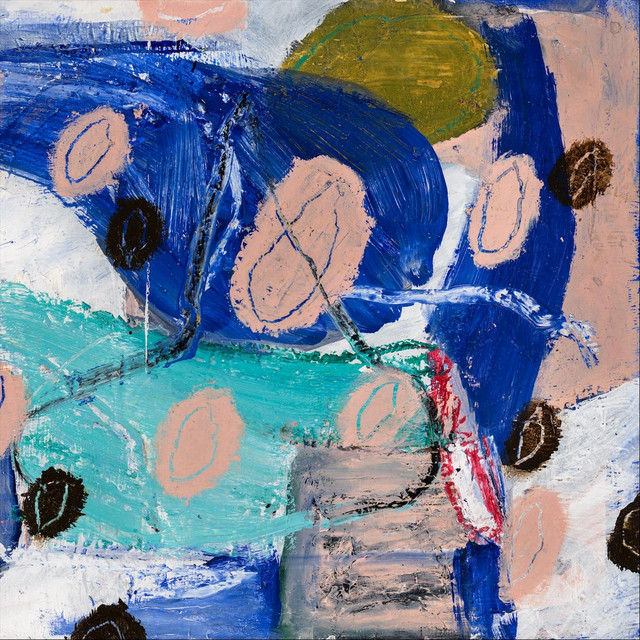
Guatemalan producer and composer Fer Franco presents his debut album, “Ritos de Paso” (“Rites of Passage”), slated for release on February 9th, 2024, with the lead single ‘Asumir Forma.’
Over the past fifteen years, Franco has cultivated a prolific career in various musical ventures. “Ritos de Paso” is a unique blend of noise rock, techno, ambient music, and krautrock. However, the album’s eclecticism takes a back seat to Franco’s primary goal: capturing music that embodies joy and impulsiveness, unbound by structure or predetermined outcomes. Franco describes the album as his personal rite of passage, a journey into comfortable music production that feels guided by effort and creative ideas.
Blurring the lines between arrangement and improvisation, Franco collaborates with some of his closest musical companions, including fellow Guatemalan composers Mabe Fratti and Alex Hentze, Mexico City stalwarts I. La Católica (Hector Tosta of Titanic), and UK musician Gary Burton, with whom he played in the now-defunct Manchester alternative rock outfit Cosmos Collapse.
The lead single, ‘Asumir Forma,’ is an ethereal ambient techno track featuring Mabe Fratti, I. La Católica (Hector Tosta), and Alex Hentze. Born out of two separate ideas that miraculously converged over time, the track combines haunting layers of sound with a clanging, subaqueous pulse. “Asumir Forma” explores the theme of taking shape, assuming form, and finding comfort in one’s own skin—a reflection on the non-linear nature of this transformative journey.
Franco describes ‘Asumir Forma’ as his most challenging piece to create, resonating deeply with its essence. Collaborating with Alex, they meticulously ensured seamless transitions, while Hector’s guitars and Mabe’s cellos played a pivotal role in weaving together the track’s eerie character and propelling its forward momentum. The track was finalized at Hugo Quezada’s Progreso Nacional studio in CDMX, where guitars, cellos, and the beautiful ARP Solina were recorded.


