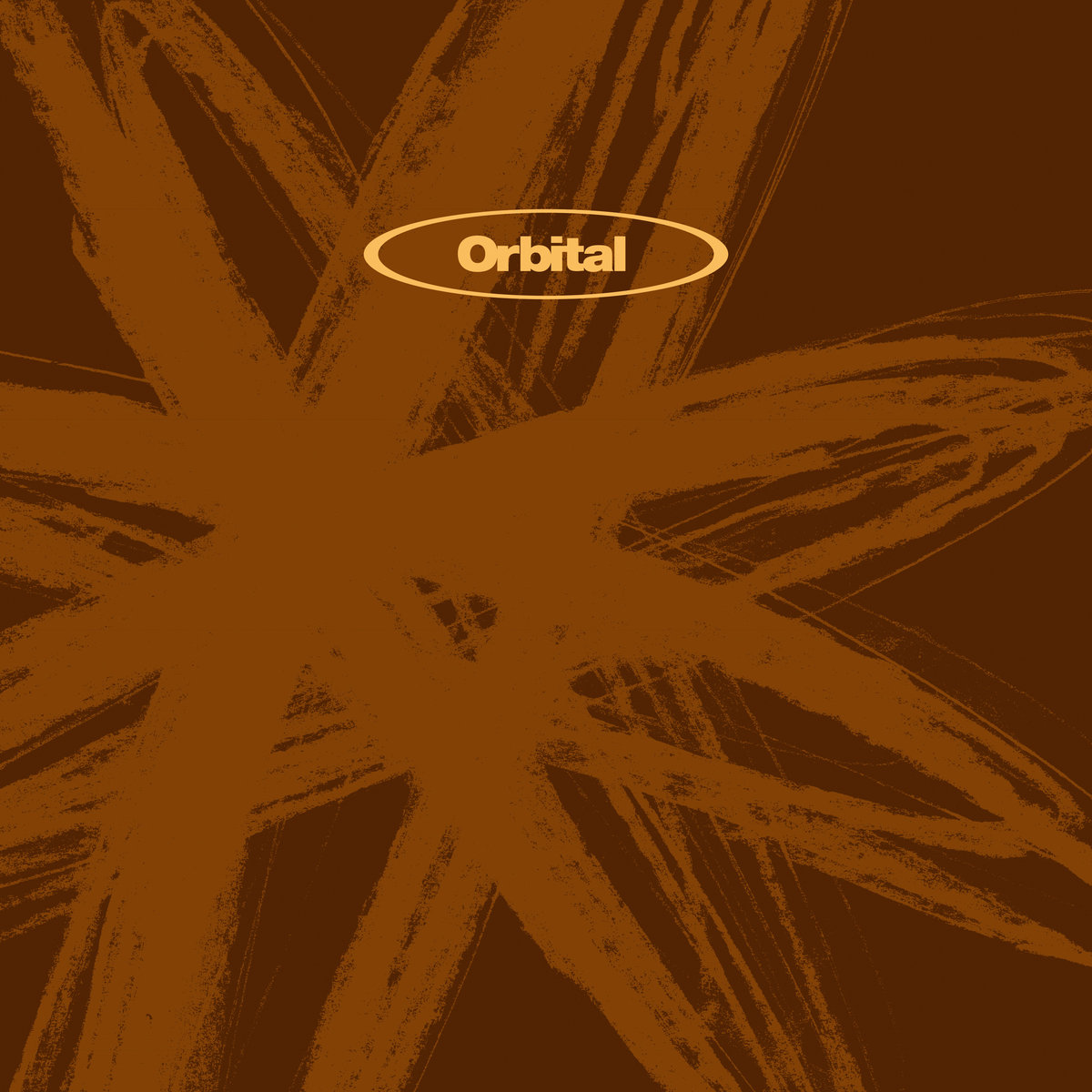
Orbital’s second album arrived in September 1993, just as British electronic music was beginning to grow beyond the immediate culture of 12-inch singles and club tracks. Officially another self-titled album, it became known as the Brown Album to distinguish it from the 1991 debut. Its ten tracks show brothers Paul and Phil Hartnoll developing a particularly effective approach to long-form electronic arrangements: repetition remains central, but almost nothing stands still.
Making the album: sequencers, samplers and ADAT
A 1993 Future Music interview, republished by MusicRadar, is especially revealing because it catches Orbital discussing the actual working method while the album was new. Their setup included Roland TR-909 drum programming and TB-303 bass synthesis, an Akai S700 sampler, multiple Alesis MMT-8 hardware sequencers and an Alesis ADAT eight-track recorder. Not every part came from the same machine: those devices formed an interlinked arrangement system, with the brothers controlling what played and when.
The MMT-8s were important because they allowed separate rhythmic and melodic sequences to run together, with parts entering or dropping out in real time. Instead of fixing everything into a linear timeline, Orbital could treat the arrangement as a performance. The ADAT addressed another problem: an analogue synthesiser might require ongoing filter and modulation movements, while both musicians were already occupied mixing and controlling other instruments. Recording a carefully shaped synth pass to digital tape made those performances repeatable alongside the rest of the sequenced material.
The brothers also used recordings of environmental sound. Their interview discusses the distinctive pedestrian-crossing signals from Australia, a reminder that sampling was not limited to drum breaks or recognisable fragments of records. Small everyday noises could become rhythmic material, altered through repetition and context. These details make the album’s sound-world less neatly synthetic than it first appears.
Time Becomes and Planet of the Shapes
The record opens with Time Becomes, a brief experiment in repetition that creates a slightly unsettling entrance before the full-scale music begins. Planet of the Shapes then moves into a much wider frame: a firm electronic pulse, shifting timbres and layers of melodic material that recur at different intensities. The rhythm establishes continuity, while the sounds above it suggest constant adjustment.
There is no rush to arrive at a chorus. Patterns are allowed to establish themselves, and small changes to texture or emphasis become meaningful because the underlying structure is so persistent. It’s an arrangement technique that can seem deceptively straightforward until you try maintaining interest across nine or ten minutes.
Lush 3-1 and Lush 3-2: one idea, multiple movements
The two Lush 3 tracks form a central demonstration of the duo’s developing style. Lush 3-1 layers a distinctive melodic figure over propulsive sequencing, adjusting the weight of the drum and synth parts as it moves forward. Lush 3-2 carries the idea into another passage, rather than delivering the sort of self-contained sequel implied by a conventional single.
What makes these pieces work is the control of density. A groove can feel full, then suddenly become more exposed as one element falls away. A filter shift or new harmonic layer restores momentum without the whole arrangement needing to restart. The tracks sound designed for change in front of an audience, which fits the brothers’ performance-led production setup.
Watch/listen: Lush 3-2, official visualiser.
Impact, Remind and the weight of repetition
Impact (The Earth Is Burning) stretches across more than ten minutes on the original album. Its recurring figures and driving rhythm gradually build a sense of scale; the length gives the track room to shift direction without losing its identity. Remind is another example of the album’s balance of sharp-edged electronic sound and sustained, melodic movement.
Across the album, the TB-303’s resonant character provides one possible source of rhythmic elasticity, although it would be misleading to assign every acidic-sounding line to that machine by ear. Paul’s contemporary comments establish the 303 as part of Orbital’s working palette; they do not provide a definitive track-by-track signal-flow diagram.
Halcyon + On + On: a different kind of momentum
Near the end, Halcyon + On + On offers a gentler counterweight to the more insistent pieces. Its airy, repeating vocal material and comparatively spacious arrangement demonstrate how Orbital could find forward movement without leaning entirely on aggressive drum sounds. The track provides a release of tension while still depending on the same principles of cycling motifs, shifting layers and gradual accumulation.
It is worth distinguishing this album version from other releases bearing the Halcyon name. The original album track is listed as Halcyon + On + On in Orbital’s official discography, while expanded reissues collect related versions and additional material.
Watch/listen: Halcyon + On + On, official visualiser.
What the Brown Album teaches about electronic arrangement
For producers, the Brown Album remains an excellent study in musical development using a limited set of active elements. Try listening for four things: the moment a sequence first appears; when it drops out; which modulation or filtering changes while the notes stay constant; and how the drums reshape the apparent energy of a section. The harmonic material does not need to change every few bars for the track to keep progressing.
The most important lesson is arguably the relationship between structure and performance. Orbital used sequencers to repeat material precisely, then introduced variation through selection, muting, modulation and recording. The result retains a slightly unpredictable energy despite its strongly programmed foundations.
The 2025 expanded edition
London Records released an expanded version of the Brown Album in 2025, gathering related tracks, remixes and archive material alongside the original ten-track album. The label’s listings distinguish this later edition from the 1993 track sequence, so collectors should check exactly which release they’re buying. Orbital’s official Bandcamp edition provides the expanded track list.
Further listening and sources
Explore the complete Orbital discography, our guide to the best Orbital albums and the three iconic albums feature. For the production history, read the 1993 interview and the contemporaneous Music Technology feature. Album date and track order are documented by Orbital’s Bandcamp and official discography.
Find the Brown Album on CD
Affiliate disclosure: As an Amazon Associate, we earn from qualifying purchases. These links identify specific CD editions, though availability may change.
Orbital 2 (The Brown Album Expanded), 2025 double CD